Philip II, King of Spain
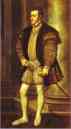 Philip II (1527-1598) king of Spain from 1556, the only son of the
Emperor
Charles V, born in Valladolid. In 1543 he married the Infanta Mary
of Portugal, who died in 1546 giving birth to their ill-fated son, Don
Carlos. In 1554 he married Mary I (Mary Tudor) of England, but spent only
14 months in her country, where the marriage was not popular. In 1555-1556
his father Charles V abdicated the sovereignty of Spain, the Netherlands
and all Spanish dominions in Italy and the New World to Philip, who nevertheless
remained in Flanders until after his father's death in 1558. He supported
the Spanish Inquisition, which he saw as a useful instrument both for combating
heresy and for extending his control over his own dominions. He was involved
in the war against France and the papacy (1557-1559) and, in 1560, against
the Turks in the Mediterranean. At home, Philip's government had to meet
threats from the Moriscoes (converted Muslims) of Granada, who rebelled
in 1568-1570 and, more seriously, from the Netherlands, in open revolt
from 1573. In 1579 Spain was unable to prevent the seven United Provinces
from gaining their independence. In 1580 Philip succeeded to the Portuguese
throne. The increase in trade-revenue from the New World in the 1480s
resulted in a new prosperity and a more confident expansionist policy.
Portugal was annexed to Spain in 1580, and attempts to re-conquer the northern
Netherlands came close to success. In 1588, the year after Drake's sack
of Cadiz, the great Armada was launched against England, which had lent
aid to the United Provinces, but failed, when storms wrecked a substantial
part of the fleet. Philip died in 1598, leaving his empire divided, demoralized
and economically depressed.
Philip II (1527-1598) king of Spain from 1556, the only son of the
Emperor
Charles V, born in Valladolid. In 1543 he married the Infanta Mary
of Portugal, who died in 1546 giving birth to their ill-fated son, Don
Carlos. In 1554 he married Mary I (Mary Tudor) of England, but spent only
14 months in her country, where the marriage was not popular. In 1555-1556
his father Charles V abdicated the sovereignty of Spain, the Netherlands
and all Spanish dominions in Italy and the New World to Philip, who nevertheless
remained in Flanders until after his father's death in 1558. He supported
the Spanish Inquisition, which he saw as a useful instrument both for combating
heresy and for extending his control over his own dominions. He was involved
in the war against France and the papacy (1557-1559) and, in 1560, against
the Turks in the Mediterranean. At home, Philip's government had to meet
threats from the Moriscoes (converted Muslims) of Granada, who rebelled
in 1568-1570 and, more seriously, from the Netherlands, in open revolt
from 1573. In 1579 Spain was unable to prevent the seven United Provinces
from gaining their independence. In 1580 Philip succeeded to the Portuguese
throne. The increase in trade-revenue from the New World in the 1480s
resulted in a new prosperity and a more confident expansionist policy.
Portugal was annexed to Spain in 1580, and attempts to re-conquer the northern
Netherlands came close to success. In 1588, the year after Drake's sack
of Cadiz, the great Armada was launched against England, which had lent
aid to the United Provinces, but failed, when storms wrecked a substantial
part of the fleet. Philip died in 1598, leaving his empire divided, demoralized
and economically depressed.
See: Sofonisba Anguissola.
Portrait of King Philip II. Portrait of Queen Isabel de Valois. Portrait of the Infantas Isabella Clara Eugenia and Catalina Micaela. Portrait of Queen Anne of Austria. Portrait of the Infanta Isabella Clara Eugenia.
Titian. Portrait
of Philip II in Armor. Portrait
of Philip II.

